Videos of the lectures are now available on the Asian Art Musem’s Apple Podcasts. Click here to view the available videos from this lecture series.
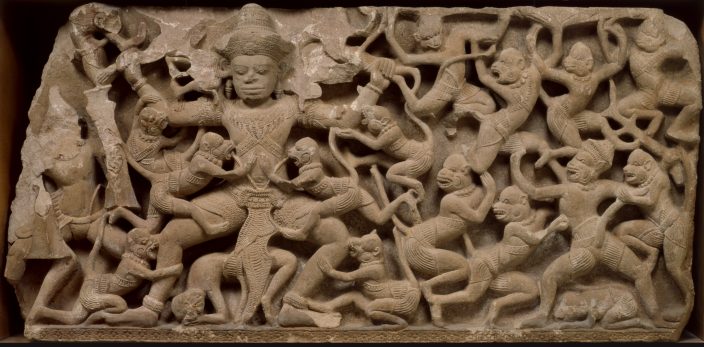
Register now for the Fall semester of the Arts of Asia lecture series! The Fall 2015 Arts of Asia series, “Asia’s Storied Traditions,” will explore narrative usage in Asian art – how myths, legends, histories, and moral precepts have been transmitted through visual means. Topics for discussion will range from the sculptural reliefs and murals used to educate pilgrims at famous religious sites (Sanchi, Dunhuang, etc.) to works created primarily for entertainment (Ramayana treatments, story depictions in Edo Ukiyo-e, the Shahnama album paintings created for Shah Tamasp, etc.). Contemporary storytelling will also be addressed via lectures on Bollywood and the manga produced by San Francisco’s Henry Yoshitaka Kiyama.
As always, a distinguished roster of prominent scholars and curators will be delivering these lectures (see list below).
Study Guides for the lectures will be posted below as they become available. Click the link to view and download the PDF.
Click here for a reading list from the Asian Art Museum’s Library.
August 21
Series Introduction Study Guide
Puranas: The Inspiration for Mythic Tales Carved on Ancient Hindu Monuments
Mary-Ann Milford-Lutzker, Mills College
August 28
The Moral of the Story: Narrative Art in Early China Study Guide
Patricia Berger, UC Berkeley
September 4
Storytelling With Pictures: An Asian Odyssey Study Guide
Victor Mair, University of Pennsylvania
September 11
Displaying the Past: Pictorial Depictions of the Buddhist Myths and Legends of the Kathmandu Valley Study Guide
Alexander Von Rospatt, UC Berkeley
September 18
The Badal Mahal at Bundi: A World Painted for Rajput Princes Study Guide
Milo Beach, Former Director Freer & Sackler
September 25
“Where Is This Story Going?”: The Paradiegetic Pleasures of Popular Hindi Cinema Study Guide
Ajay Gehlawat, Sonoma State University
October 2
Storyworlds: Architecture and Embodied Cognition in Japanese Narrative Scrolls Study Guide
Melissa McCormick, Harvard University
October 9
Telling the Tales of Rama Pre-handout Study Guide
Forrest McGill, AAM
October 16
“Reading” the Ramayana Through Javanese Temple Reliefs Study Guide
Natasha Reichle, AAM
October 23
Henry Yoshitaka Kiyama and the Manga-Comics Nexus Study Guide
Fred Schodt, Independent Scholar and Author
October 30
Nine Cloud Dream, Nectar Ritual, and Much More in Korean Art Study Guide
Kumja Paik Kim, AAM
November 6
Stories Old and Untold in Edo Period Art: Implied and Informed Narratives Study Guide
Timon Screech, SOAS
November 13
Text and Image: Early Buddhist Narrative Sculpture from Northern India and Gandhara Study Guide
Kurt Behrendt, Metropolitan Museum
November 20
The Same Me That Stands Here Now: Jataka Tales on Tenth Century Reliquaries Study Guide
Eugene Wang, Harvard University
November 27
No class, Thanksgiving break
December 4
The Shahnameh of Shah Tahmasp: A 16th Century Royal Persian Manuscript Study Guide
Sheila Canby, Metropolitan Museum