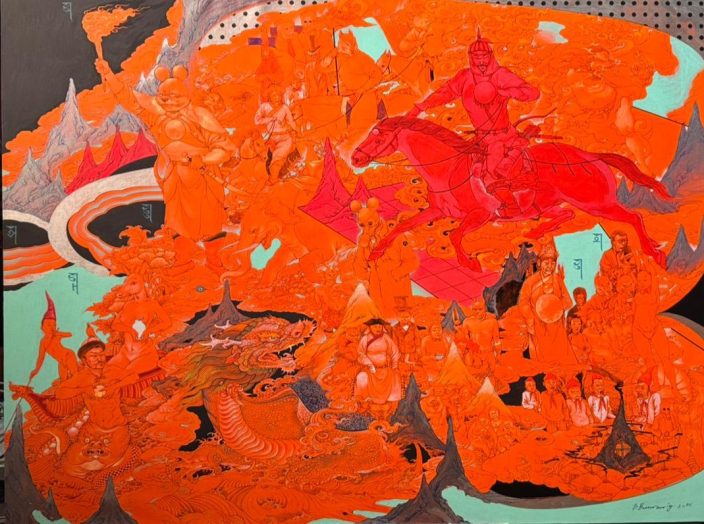
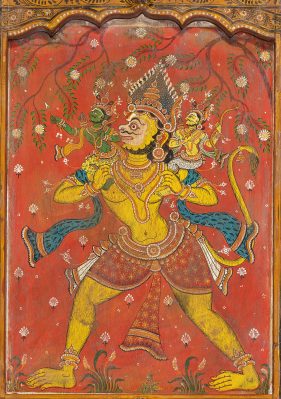
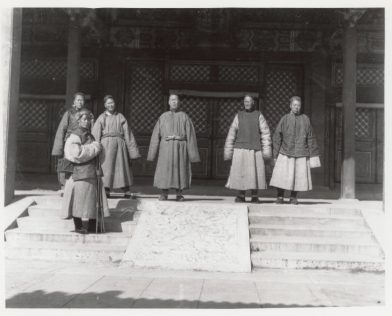
This workshop explores Mongol Zurag, a distinctive painting tradition that emerged in twentieth-century Mongolia as the invention of a new artistic tradition within the era of Socialist Realism. Developed during a period of profound social and political transformation, Mongol Zurag adapted elements of Buddhist painting, traditional imagery, and historic references into a pictorial language that became central to Mongolia’s artistic identity. Since its institutionalization in Mongolia’s art academies, generations of artists have continued to receive formal training in Mongol Zurag at the state-run art college, and many have become leading figures in the country’s contemporary art scene.
Drawing on several key works by modern and contemporary Mongolian artists from the collections of the Asian Art Museum and private collections in San Francisco, this seminar introduces participants to the history, aesthetics, and continuing relevance of Mongol Zurag. Through close visual analysis, attendees will examine the characteristic features of the tradition, including flattened spatial organization, intricate line work, narrative composition, and the creative integration of historical motifs with contemporary subjects.
The seminar also considers how Mongolian artists have expanded, challenged, and transformed painting traditions over the past century. By tracing connections between early modern masters and contemporary artists, participants will gain insight into the ways artists have developed distinct visual languages that engage questions of identity, memory, social change, and globalization. Rather than viewing Mongol Zurag as a static style, the workshop presents it as a dynamic and evolving tradition that continues to inspire new artistic experimentation and contribute to the broader discourse of contemporary art.
Uranchimeg (Orna) Tsultem is a scholar of Mongolian art. She received her Ph.D. from the University of California, Berkeley. She taught at UC Berkeley, and universities in Mongolia, South Korea and Iceland. She is currently Edgar and Dorothy Fehnel Chair in International Studies and Associate Professor at Indiana University’s Herron School of Art and Design. Her award- winning publications include eight books, many peer-reviewed articles and exhibition catalogs. Her recent monograph, A Monastery on the Move: Art and Politics in Later Buddhist Mongolia (University of Hawaii Press) received the Art Book Accolade in the Humanities for the 2023 International Convention of Asia Scholars (ICAS). An active curator of Mongolian art since 1997, Orna has organized major international exhibitions, including the first Mongolia Pavilion at the 56th Venice Biennale in 2015, the Mongol Zurag exhibition in Venice in 2024, and projects at the Shanghai Biennale and Hanart TZ Gallery in Hong Kong, among others. Her current project is the Mongolia Pavilion for the 61st Venice Biennale, presented in Italy from May to November 2026. She was awarded the Andy Warhol Foundation Arts Writers’ Grant for her research project in 2025.
This study group consists of a morning session and an afternoon session. Please note that lunch is not included in the registration fee. Attendees can purchase lunch in the museum café, and are welcome to bring food into the Koret Education Center.